
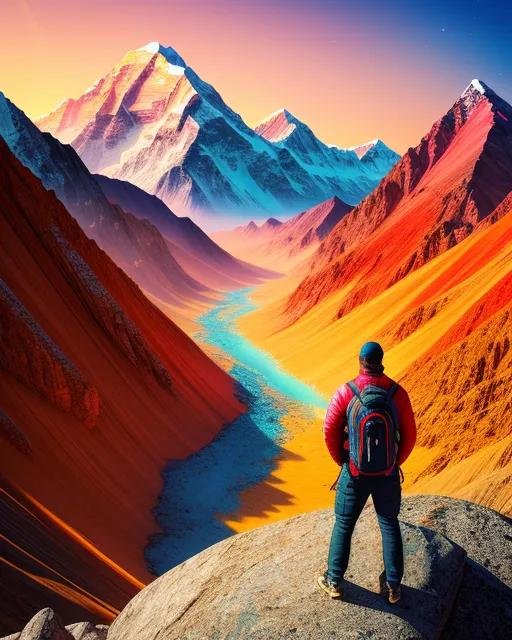
Creativity is often treated as something that happens when we sit down and deliberately try to be creative. We brainstorm. We open a blank document. We stare at a whiteboard. We ask for ideas. But some of our most creative thinking doesn’t happen when we’re trying to create anything at all. It happens when we’re somewhere unfamiliar.
A different country. A different culture. A different landscape. A different way of doing things.
Travel has a strange ability to interrupt the assumptions we carry around with us every day. It forces us to observe rather than assume. To question rather than accept. To look at familiar problems from unfamiliar angles.
I’ve experienced this firsthand.
One of the trips that had the biggest impact on the way I think was a journey through Tibet and Sichuan Province in China.
When the familiar disappears
There is something powerful about being somewhere where your normal frame of reference doesn’t quite work.
At home, we develop mental shortcuts. We know how things work. We recognize the environment around us. We understand the social cues. We know what to expect. Those shortcuts are useful. They allow us to move through everyday life without constantly analyzing everything around us.But they can also become limitations.
When you travel somewhere radically different, those shortcuts start to break down. You have to pay attention. You notice details you would normally ignore. You start asking why things are done a certain way. You become more comfortable with uncertainty because you have no choice. And that can change the way you think long after the trip is over.
Tibet: Seeing the world from a different perspective
My trip through Tibet was particularly transformative.
One of the experiences that stayed with me was travelling to Mount Everest’s First Base Camp and spending the night there. There is something difficult to describe about being at that altitude, surrounded by an environment that feels almost completely removed from ordinary life. The landscape is enormous. The environment is harsh. The scale of everything around you changes your sense of proportion. And for a moment, the usual noise disappears.
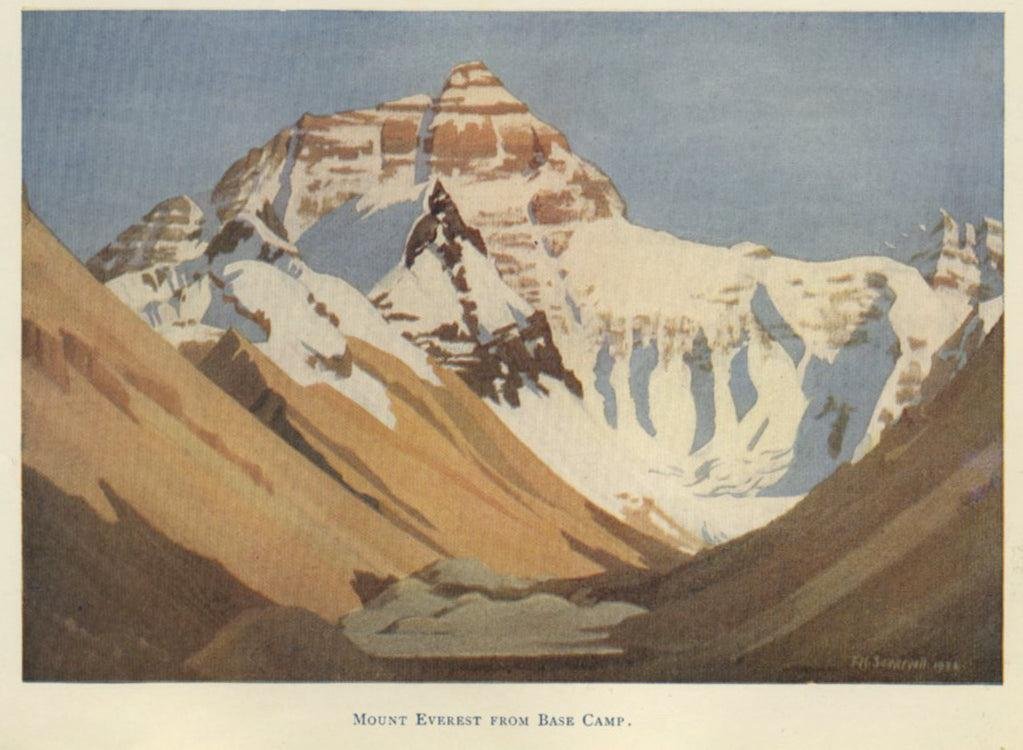
What struck me wasn’t simply the scenery. It was the perspective. Standing in a place like that makes it difficult to maintain the same assumptions about the world that you had while sitting at a desk thousands of kilometres away. The experience encouraged me to become more observant. Instead of simply accepting what I was seeing, I became more interested in understanding it.
Why is this landscape like this? …Why do people live this way? …Why does this particular environment produce these particular behaviours? …What am I assuming simply because it is familiar to me?
Those questions followed me after I left.
From Tibet to Sichuan
The journey continued into Sichuan Province, and the contrast was striking. The landscape, culture, food, architecture, pace of life and everyday experiences created another set of unfamiliar perspectives.
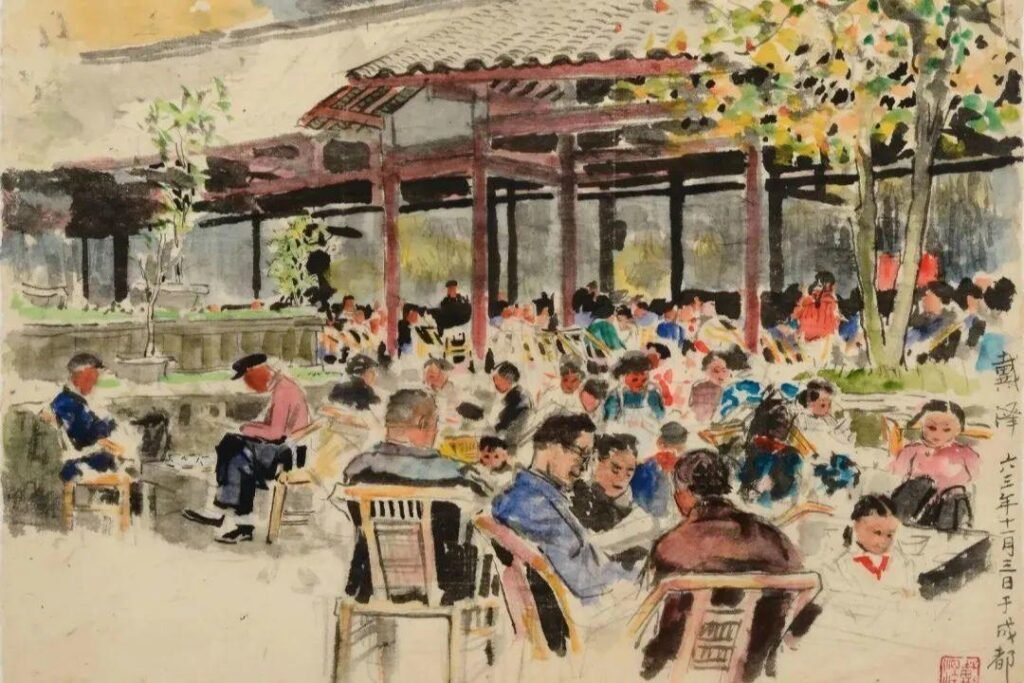
Moving through these different environments created a kind of mental reset. I came back energized. But more importantly, I came back looking at things differently. I stopped taking things at face value as often. Instead of immediately accepting that something was the way it was because “that’s how it’s done,” I became more inclined to ask what was underneath it. That habit turned out to be surprisingly useful professionally.
Curiosity is a creative skill
Creativity isn’t necessarily about producing something artistic.
In business, creativity can mean finding a different way to solve a problem. It can mean questioning a process that everyone has accepted for years. It can mean connecting two ideas that previously seemed unrelated. It can mean noticing a pattern that other people overlooked. And all of those things begin with curiosity.
Travel encourages curiosity because unfamiliar environments naturally create questions.
You encounter a different approach to transportation, architecture, food, communication, commerce or social interaction, and your brain starts comparing it with what you already know.
Why is their approach different?
What problem were they solving?
What assumptions are behind their solution?
Those questions can become a powerful creative exercise.
The connection to problem-solving
This is where travel eventually became relevant to my professional life. When I returned from the trip, I found myself approaching problems differently.
Rather than immediately jumping toward the most obvious solution, I became more comfortable stepping back and asking whether I was looking at the problem correctly in the first place. That distinction matters.
Sometimes the biggest obstacle to solving a problem isn’t a lack of ideas. It’s the assumption that we’ve already defined the problem correctly. Travel had taught me to question my frame of reference. If there are multiple ways to organize a city, navigate a landscape, build a community or solve an everyday problem, there are probably multiple ways to approach a business problem too. The goal isn’t to copy what you see somewhere else. It’s to recognize that there are alternatives.
Travel creates useful friction
We often try to make our lives more efficient. We automate things. We create routines. We build processes. We remove friction. And for good reason. But creativity sometimes benefits from the opposite. It benefits from a little friction. A different language. An unfamiliar road. A meal you’ve never eaten. A transportation system you don’t understand. A building designed according to principles you’re unfamiliar with. These experiences force your brain to slow down and pay attention.
You’re no longer operating entirely on autopilot.

That temporary disruption can be valuable.
It creates space for observation. And observation is one of the foundations of creative thinking.
You don’t have to climb Everest
The lesson isn’t that everyone needs to travel to Tibet or spend a night at Everest Base Camp to become more creative. The destination isn’t the point. The change in perspective is.
You can get some of the same effect by exploring somewhere you’ve never been in your own city. Visiting a museum. Taking a different route to work. Learning about another culture. Reading outside your usual interests. Having a conversation with someone whose experiences are very different from yours.
The objective is to deliberately expose yourself to ideas and environments that don’t fit neatly inside your existing mental model.
Sometimes creativity needs new information. Sometimes it simply needs a new angle.
Bringing the journey home
The most interesting thing about travel is that the trip eventually ends.
You return home. You go back to work. The emails start again. The meetings return. The routines come back.
But ideally, you don’t come back exactly the same.
For me, the lasting benefit of that journey wasn’t a collection of photographs or memories—although those are certainly valuable. It was a change in how I observed the world. Tibet and Sichuan energized me, but they also made me more questioning. I became more interested in what sits underneath the obvious answer. And that mindset has continued to influence how I approach problems in my work and in everyday life.
When something isn’t working, I try not to immediately ask:
“How do we fix this?”
I try to ask:
“Why are we doing it this way in the first place?”
That small shift can open up an entirely different set of possibilities.
Creativity begins with seeing differently
We tend to think of creativity as producing something new. But perhaps it begins earlier than that. Perhaps creativity begins with seeing something differently.
Travel can help because it temporarily removes us from the environments that have trained us to see the world in familiar ways. It gives us new reference points.
New questions.
New contrasts.
New experiences.
And sometimes, a little distance from our normal lives is enough to reveal possibilities that were difficult to see while we were standing in the middle of them.
For me, that realization began somewhere between Tibet and Sichuan. I went looking for a different experience. I came home with a different way of looking at the world.
And that may be one of the most valuable souvenirs a journey can give you.
References
- de Bloom, J., Ritter, S., Kühnel, J., Reinders, J., & Geurts, S. (2014). Vacation from work: A ‘ticket to creativity’? The effects of recreational travel on cognitive flexibility and originality. Tourism Management, 44, 164–171. https://doi.org/10.1016/j.tourman.2014.03.013
This longitudinal study examined creativity before and after vacation and found an increase in cognitive flexibility following a longer vacation, although originality did not significantly increase. - Maddux, W. W., & Galinsky, A. D. (2009). Cultural borders and mental barriers: The relationship between living abroad and creativity. Journal of Personality and Social Psychology, 96(5), 1047–1061. https://doi.org/10.1037/a0014861
This research examined the relationship between living abroad and creativity and found that time spent living abroad, rather than simply travelling abroad, was associated with creativity. The researchers also found that cultural adaptation played a role in this relationship. - Fee, A., & Gray, S. J. (2012). The expatriate-creativity hypothesis: A longitudinal field test. Human Relations, 65(12), 1611–1636. https://doi.org/10.1177/0018726712454900
A longitudinal field study examining expatriate experiences found increases in overall creative-thinking abilities and cognitive flexibility compared with a control group, although not in every dimension of creativity. - Su, L., Chen, H., & Lin, Z. (2025). Igniting creativity through travel: The roles of interest, cognitive flexibility, and destination information presentation style. Tourism Management, 111, 105228. https://doi.org/10.1016/j.tourman.2025.105228
More recent research found that novel environments can increase the flexibility dimension of creativity, with interest and cognitive flexibility helping explain the relationship. The study did not find the same effect for originality, highlighting the distinction between generating a wider range of ideas and producing more original ideas. - Zhang et al. (2024). How tourism memory boosts creativity? The role of openness to experience. Tourism Management, 100, 104833. https://doi.org/10.1016/j.tourman.2023.104833